
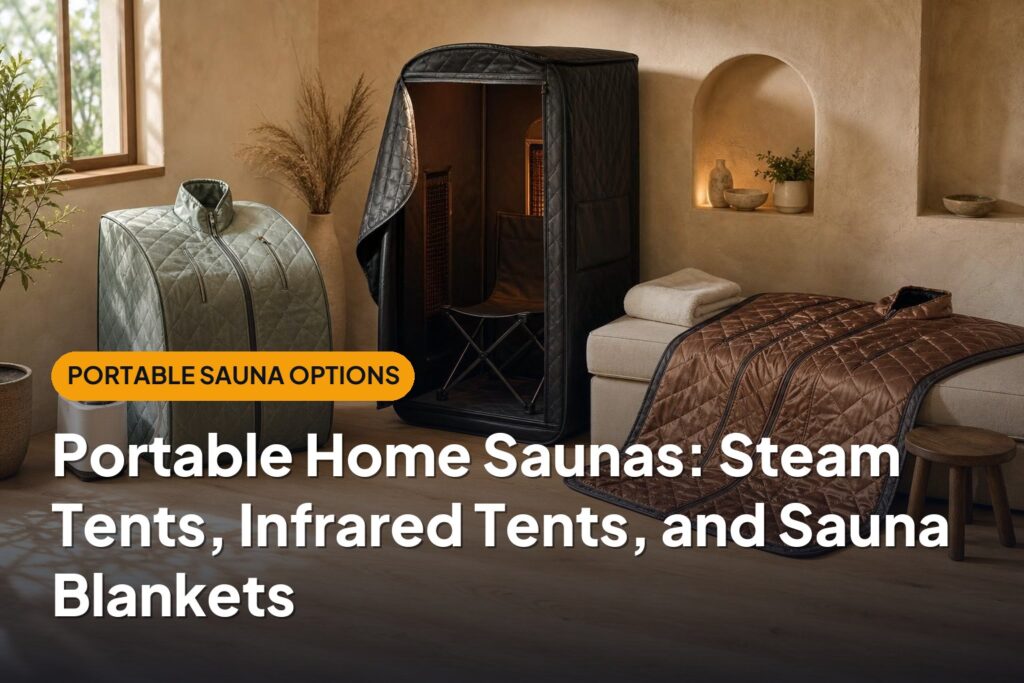
A portable home sauna offers a way to enjoy personal heat sessions without building a dedicated sauna room. The main options are steam tents, infrared tents, and heated sauna blankets, but they differ considerably in how they feel, how much space they need, and how much cleanup they require. This guide explains those differences, introduces outdoor wood-stove sauna tents, and helps you choose a setup that fits your home and routine.
1. What Counts as a Portable Home Sauna?
“Portable” usually means a sauna can be moved, folded, or dismantled rather than permanently installed. It does not necessarily mean lightweight, cordless, or convenient to pack away after every session.
Most indoor models use household electricity. Outdoor wood-stove tents use a separate combustion stove and require a suitable outdoor location. Neither category should be treated as interchangeable with the other.
Portable steam tents
A portable steam sauna typically combines a fabric enclosure, a chair, and an external electric steam generator. The generator heats water and sends steam into the tent through a hose.
Some designs leave your head outside, while others enclose your whole body. The enclosed air becomes warm and very humid, creating a different experience from the hotter, drier environment of many traditional saunas.
Steam tents can suit people who enjoy moist heat and a seated session. Their main trade-off is moisture management: the tent, chair, floor protection, and surrounding area may all need attention afterward.
Portable infrared tents
Infrared tents use electric heating panels or other infrared emitters rather than a steam generator. Depending on the design, you sit inside with your head exposed or enter a larger enclosure.
They generally produce less ambient moisture than steam tents, although sweat still needs to be managed. Panel placement, chair position, enclosure size, and heater design all influence comfort and heat distribution.
Infrared sauna blankets
A sauna blanket wraps around your body while you lie down, usually with your head outside. Electric heating elements warm the enclosed space around you, with heat transferred through both radiation and contact with the blanket’s layers.
Blankets avoid the frame and chair of a tent, making them appealing for easy storage. However, they need a suitable full-length surface during use, and their enclosed, close-fitting feel does not suit everyone.
Outdoor wood-stove sauna tents
A wood-stove sauna tent is a separate category designed for outdoor use with a compatible stove and chimney system. It can provide a more traditional sauna atmosphere, but setup involves fire safety, ventilation, fuel handling, and weather considerations.
Only use a tent and stove combination specifically designed for this purpose. An ordinary camping tent is not a safe substitute.
2. Steam, Infrared Tents, and Blankets Compared
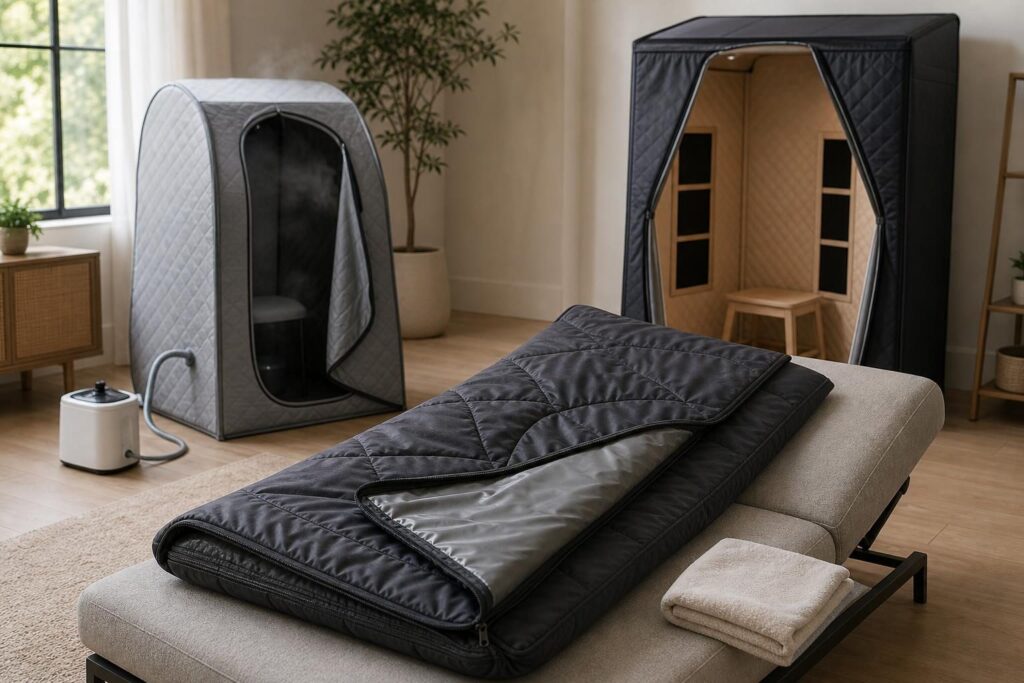
The best portable home sauna is not necessarily the one advertised as hottest. A useful comparison considers heat sensation, usable space, setup effort, and what happens after the session.
| Type | Heat experience | Space during use | Main upkeep |
|---|---|---|---|
| Steam tent | Warm, humid air with possible condensation | Enclosure, chair, generator, and safe access | Drain, wipe, and thoroughly dry wet components |
| Infrared tent | Radiant heat with comparatively dry air | Enclosure, seating, and heater clearances | Remove sweat and clean surfaces as directed |
| Sauna blanket | Close-fitting heat around the body | A suitable full-length resting surface | Clean the lining and dry before folding |
| Wood-stove tent | Stove-heated air; steam only where the system permits | Outdoor footprint plus fire-safety clearances | Dry the tent and maintain the stove and chimney |
Steam versus infrared: moisture is a major difference
Humidity affects how heat feels and how readily sweat evaporates. A steam tent may feel intense at an air temperature lower than that of a traditional dry sauna. Temperature figures alone therefore do not provide a reliable comfort comparison.
Infrared systems avoid deliberate steam production, but “dry” does not mean maintenance-free. Sweat can collect on chairs, towels, enclosure surfaces, and blanket linings.
Sauna blanket versus infrared tent: posture matters
A blanket often wins on stored size, while a tent may suit someone who prefers sitting upright or having more room around their body. Compare both the packed dimensions and the complete operating footprint.
Neither format universally “works better.” The better choice is the one you can enter, leave, clean, and use comfortably within the manufacturer’s instructions.
3. Choosing a Sauna for a Small Home or Apartment
Start with the available room, not the product photograph. Measure the floor area, ceiling height, doorway access, storage location, and distance to a suitable outlet.
For a small home, a compact steam tent can be practical if you have somewhere to leave it open while it dries. If drying space is limited, an infrared tent or blanket may be easier to accommodate.
Check the complete footprint
- Steam tent: Allow room for the external generator, hose routing, and safe entry and exit.
- Infrared tent: Account for the assembled enclosure and all required heater clearances.
- Sauna blanket: Measure the full-length use surface, not just the folded blanket.
- Every type: Keep doors, walking routes, and emergency exits clear.
A product described as folding may still be awkward to dismantle every day. Check whether folding involves removing poles, disconnecting panels, or waiting for multiple surfaces to dry.
Can you use a portable sauna in an apartment?
Possibly, but permission and suitability are separate questions. Review your lease, building rules, electrical requirements, and any restrictions on moisture-producing appliances. Ask the landlord or building manager when the rules are unclear.
Steam is particularly important in an apartment because repeated moisture exposure can affect flooring, walls, and furnishings. Ventilation should remove humidity rather than simply move it elsewhere in the room.
Do not assume a balcony is suitable for a wood-stove tent. Building rules, fire restrictions, clearances, and the risk to neighboring units generally make combustion equipment a very different proposition from an indoor electric sauna.
4. What to Check Before Buying
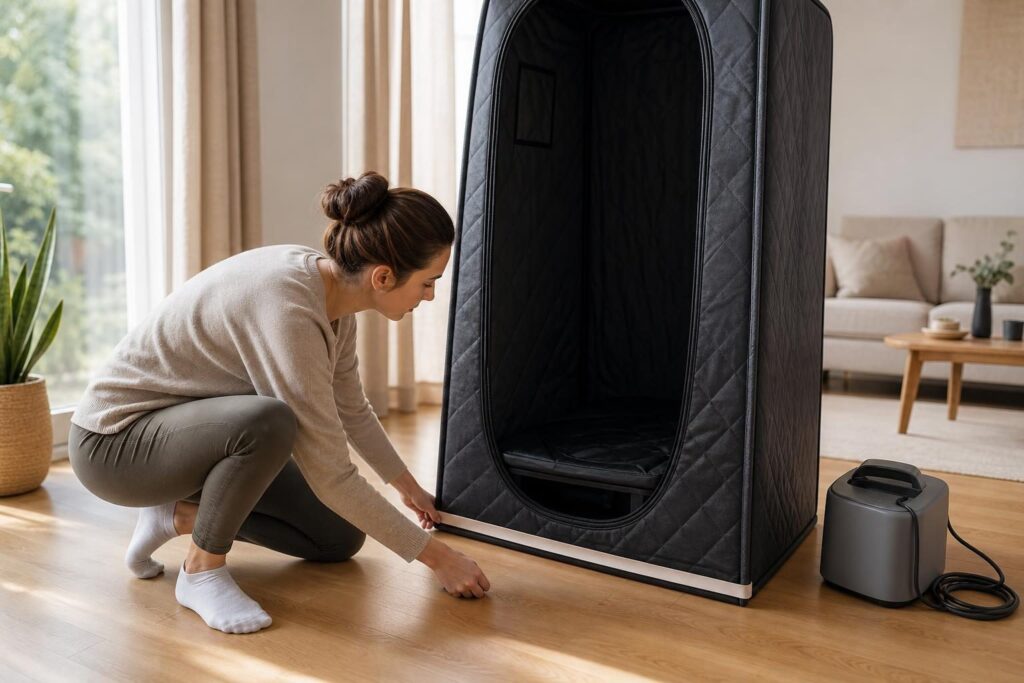
Useful specifications describe how a sauna fits into daily life. Marketing phrases about intense sweating or advanced infrared technology are less helpful than clear instructions, dimensions, and safety information.
- Dimensions and fit: Check interior space, user size limits, chair capacity, and whether you can exit independently.
- Power requirements: Confirm voltage, rated wattage, plug type, and compatibility with your electrical supply.
- Controls: Look for accessible temperature settings, a timer, and documented overheat protection.
- Safety information: Seek recognized independent safety certification appropriate to your country and verify what it covers.
- Materials: Check cleaning requirements, skin-contact guidance, and any required clothing or liners.
- Ownership support: Review the warranty, return policy, replacement parts, and availability of a full manual.
Steam-tent buying considerations
For small homes, prioritize manageable dimensions, stable seating, straightforward drying, and an accessible steam generator. Water capacity alone does not tell you how evenly or comfortably a tent heats.
If you are considering a SereneLife portable steam sauna, identify the exact version before comparing reviews. Check its enclosure style, included accessories, generator instructions, and floor-space requirements rather than assuming every product under the brand is identical.
Blanket buying considerations
For an easy-storage sauna blanket, look beyond the folded size. Consider weight, how long it must cool before packing, whether the interior opens fully for cleaning, and where it will dry.
The HigherDOSE Infrared Sauna Blanket is one named option in this category. A useful review should examine setup, comfort, required clothing or barriers, cleaning access, and storage—not simply repeat wellness claims. Confirm instructions for the specific version being sold.
Outdoor tent buying considerations
For a backyard wood-stove tent, compatibility between the tent, stove, flue, and heat-protection components is essential. Also consider the ground surface, anchoring, weather limits, local smoke rules, and safe fuel storage.
Include accessories and ongoing needs in your budget: washable towels, approved liners, suitable floor protection, replacement components, electricity, or firewood. Wattage and session duration both affect electricity consumption.
5. Setting Up Without Damaging Your Home
Read the complete manual before assembling or plugging in any portable home sauna. The product’s instructions should determine placement, electrical connection, clearances, and any protective layers.
Protect floors from heat and moisture
For a steam tent, choose a level location where moisture can be contained and dried promptly. Carpet, unsealed wood, and moisture-sensitive flooring are poor choices unless the manufacturer provides a suitable, clearly specified installation method.
Use only floor protection compatible with the sauna and the floor beneath it. A towel can absorb drips, but it is not a reliable waterproof barrier. Conversely, an impermeable mat may trap unnoticed moisture underneath.
- Inspect the floor, tent, hoses, cables, and connections before setup.
- Fit any manufacturer-approved protective base without creating a trip hazard.
- Place the steam generator in its specified position on a stable surface.
- Route the hose without kinks and keep the steam outlet away from skin.
- Keep plugs and controls away from drips, wet towels, and standing water.
- After use, inspect and dry both the protective layer and the floor beneath it.
Set up blankets and infrared tents correctly
Do not assume a sauna blanket is safe on any bed, couch, or rug. Follow its requirements for a flat, heat-tolerant surface and any specified clothing, towels, or liners. Never add insulating layers unless the instructions permit them.
Keep infrared emitters unobstructed, and do not use the enclosure to dry clothing. Avoid extension cords and power strips unless expressly permitted; if electrical suitability is uncertain, consult a qualified electrician.
6. Using a Portable Sauna Safely and Comfortably
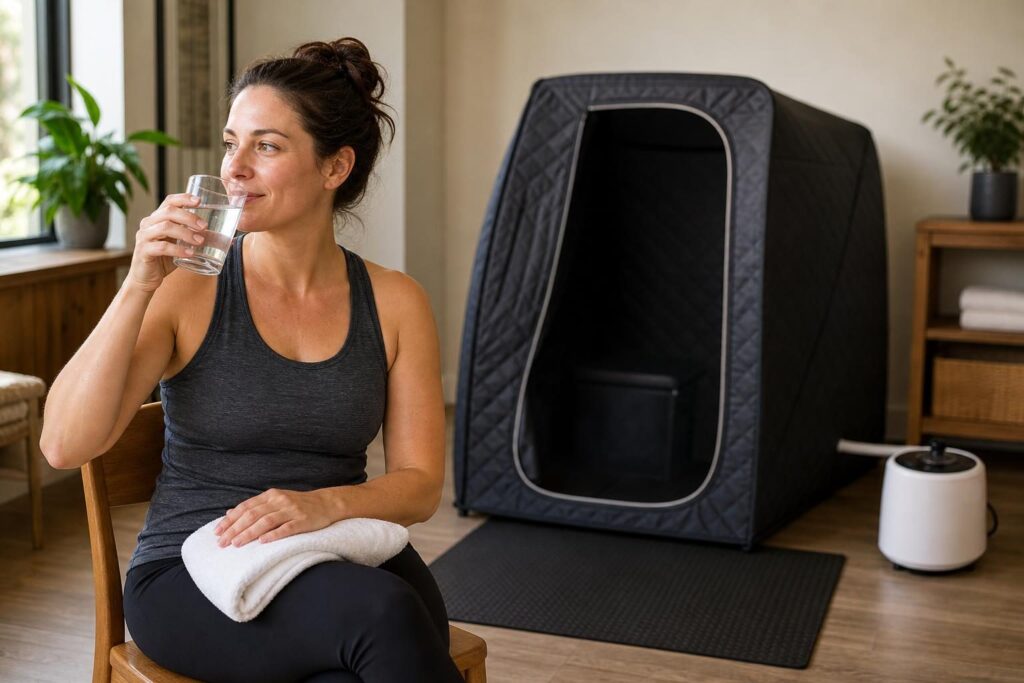
Portable saunas can cause overheating, burns, dehydration, falls, and electrical injury if used incorrectly. A head-out design does not eliminate these risks.
If you are pregnant, have a medical condition, take medication that affects sweating or blood pressure, or have difficulty sensing heat, ask a clinician whether heat sessions are appropriate. People who need help entering or exiting should not use a sauna alone.
- Begin conservatively within the manufacturer’s temperature and time limits.
- Drink water as appropriate, but do not treat hydration as protection against overheating.
- Avoid sauna use while drinking alcohol, using impairing substances, or feeling unwell.
- Leave immediately if you feel dizzy, nauseated, faint, unusually weak, or uncomfortable.
- Never sleep in a sauna blanket or tent.
- Keep children and pets away from hot equipment, cords, and steam outlets.
Never open a hot steam generator or refill it while operating unless its instructions explicitly provide a safe procedure. Steam and hot water can burn even when surrounding surfaces feel tolerable.
Special precautions for wood-stove tents
Wood-stove tents are outdoor-only equipment. Never operate one inside a home, garage, shed, or other enclosed structure. Maintain the specified ventilation, stove clearances, chimney arrangement, and anchoring.
Combustion introduces carbon monoxide and fire risks. Follow all manufacturer requirements and local restrictions, keep appropriate fire-safety equipment available, and never leave the stove burning unattended.
Keep wellness expectations realistic
A sauna may offer an enjoyable way to unwind, but a portable unit is not automatically equivalent to the sauna settings examined in health research. Benefits reported for one sauna type or routine cannot simply be transferred to every blanket or tent.
Sweating is not evidence of meaningful “detoxification,” and short-term weight loss after a session is mainly fluid loss—not fat loss. More heat and longer sessions are not necessarily better.
7. Cleaning, Drying, and Storage
A practical cleaning routine is part of choosing the right sauna. If a product is difficult to dry in your home, it may be inconvenient even when setup is easy.
After a steam-tent session
- Switch off the equipment, disconnect power as directed, and allow everything to cool.
- Empty residual water from the generator according to its instructions.
- Remove damp towels and wipe condensation from accessible surfaces.
- Clean the chair, base, and tent lining using approved methods.
- Leave the enclosure open until seams, corners, and folds are completely dry.
- Check the floor and protective layers before putting the sauna away.
Follow the generator’s descaling instructions where applicable. Do not add essential oils, fragrances, or cleaning chemicals to the water tank unless explicitly permitted.
After an infrared-tent or blanket session
Remove sweat promptly and clean contact surfaces with the recommended product. Do not soak electrical components, spray controls, or machine-wash an enclosure unless the manual specifically allows it.
For a blanket, open it as directed and let the lining dry fully before folding. Avoid tight creases or storing heavy objects on top if these could damage internal heating elements.
Prevent persistent odors and mildew
Never pack a damp sauna into a closed bag. Wash removable textiles regularly, inspect seams and hidden folds, and store the equipment in a dry place.
If you find persistent mildew, damaged wiring, cracked hoses, or worn heat-resistant components, stop using the affected equipment until it has been safely cleaned, repaired, or replaced.
8. Conclusion: Choose for Your Space and Routine
The right portable home sauna balances heat preference with practical ownership. Choose a steam tent for humid heat if you can manage drying, an infrared tent for seated sessions without added steam, or a blanket when compact storage matters most. Consider a wood-stove tent only for a suitable outdoor setting.
Before buying, check the full operating footprint, electrical or fire-safety requirements, cleanup process, and ease of exit. A sauna that fits your home and is straightforward to maintain is more useful than one chosen for temperature claims alone.